


Spain
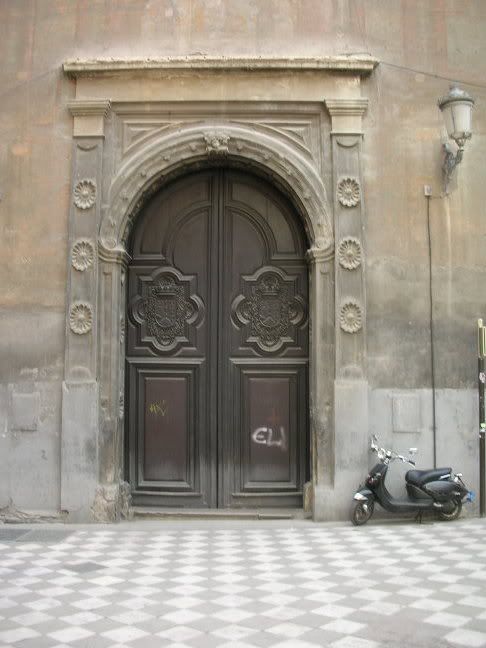
Toledo, Cordoba, Madrid, Barcelona, Cadiz, Grenada, Seville, Tarifa.
As we traveled, he continually asked me if these place names resonated with me as they did him. Cities on a page. Cities on a page of a history book under the nose of a curious teenager 40 years ago. Coming to life?
I didn't really know how to answer. How do you gauge resonance? With the exception of the Spanish Civil War, at school I didn't really study Spanish history, and even when we studied European history I didn't pay close attention. Obviously, my father did.
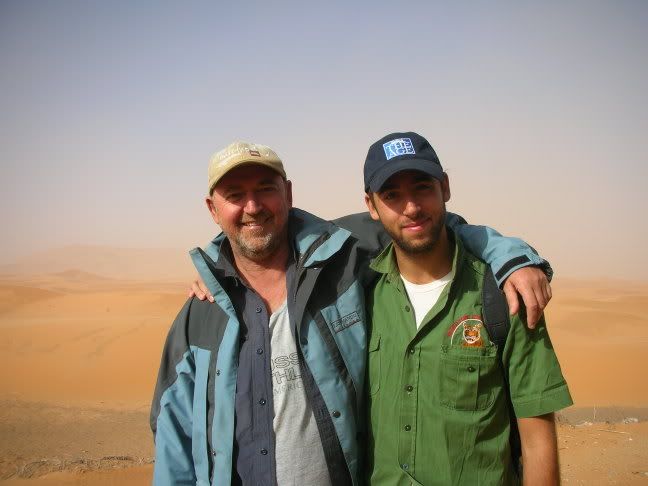
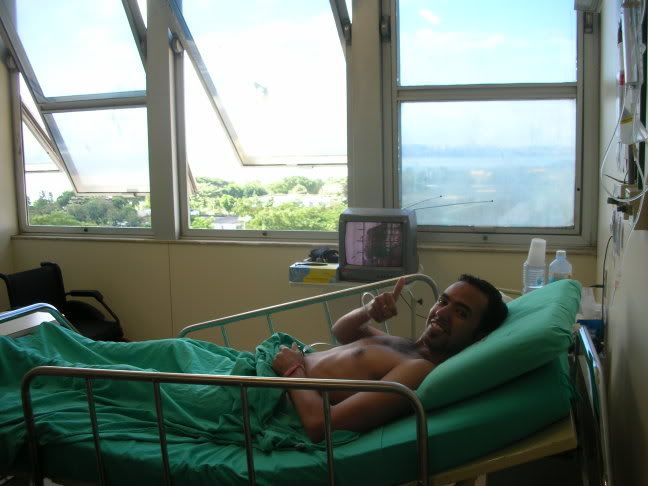
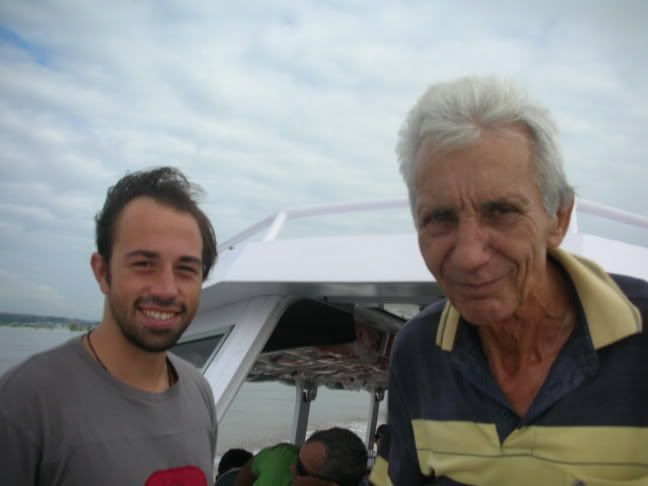
After being discharged from hospital in Brasil I flew directly to Madrid where, after a few days I met Alex, my dad. As you would imagine, I was very happy to see him. I mean, Bruno was great company but nothing compares with dad. Do you know him? If you do you will know exactly what I mean.
It was great to have someone to vomit my stories upon in real time, free of keyboard restrictions. So, after a few days in Madrid we set out on a father and son viaje por España.
Toledo, Cordoba, Madrid, Barcelona, Cadiz, Grenada, Seville, Tarifa, and more.
Beautiful cities with beautiful squares and monuments and castles and museums and mosques and churches and cathedrals and cathedrals that were mosques. We tried very hard to find real Spain. However, most of the time dad and I felt like sheep. Walking around. Reading plaques. Giving money. Taking pictures. As you would expect, after three weeks of plaques, which never make any sense anyway, we got tired. I got very tried of moving fast and ticking the boxes. In the final few days of our time in Spain we chose to visit a region in the north called Pais Basco.
The "Basque Country" is comprised of three provinces in the North of Spain. There are four famous places; Bilbao (famous for the Guggenheim museum), Pamplona (famous for the Running of the Bulls), San Sebastian (famous for its physical beauty) and Guernica (famous for being bombed in 1937, and consequentially, a painting depicting the event by Pablo Ruiz Picasso). Alex and I visited San Sebastian and Bilbao. We are not, unlike many Australian men, keen on being impaled by a torro. Additionally, we stood in awe at Picasso's stunning and confronting Guernica in Madrid. Oh, and I studied it in year 11 history class. I also concentrated. Time was short so we skipped seeing yet another monument in Guernica itself.
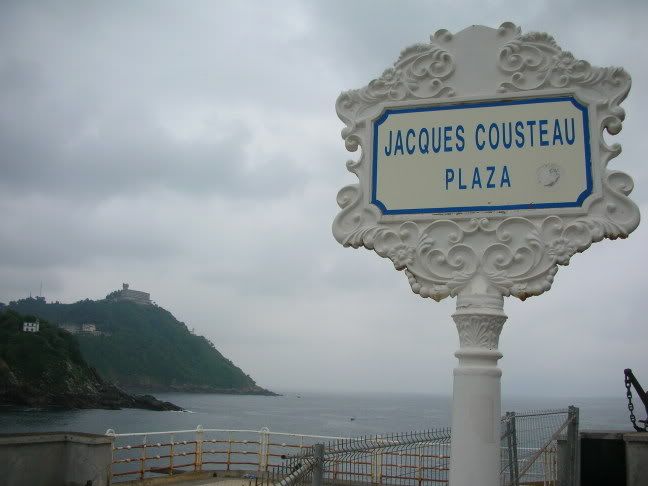
I wanted to visit the region for a two key reasons; the Euskadi and the Guggenheim.
I wanted to hear the unique language that the Euskadi speak, Euskadi. I wanted to see the Guggenheim in Bilbao – the building itself more than the art. Dad had also been told that San Sebastian, a small city on the North Coast quite near to the French border, is the most beautiful city in Spain. After seeing Grenada early on, I doubted the possibility of this being true.
Well, from what I have seen, it is true. San Sebastian is beautiful and San Sebastian is wealthy. I later learned that Pais Basco is one of the wealthiest regions in Spain, with a GDP of more than 20% above the EU average. It boasts the stunning topography of Rio de Janeiro, but on a much smaller scale. A little wealthy rainy Spanish Rio. Delightful.
Great. But the language?
Signs were in Euskadi – but also Spanish and English. I didn't hear any Euskadi until late in the afternoon of our first day in Bilbao. Even when I did, I thought I was hearing Spanish – just maybe all words I had never heard before. Strange words. Euskadi, which has no traceable links to any other language on the planet is of course markedly different from Spanish. However, when spoken by Bi-lingual Euskadis the strong Spanish accent can confuse. And did.
Whilst in a deli I asked the lady behind a counter of 100 Euro hams why I am not hearing much Euskadi on the street. She answered, that in places such as Bilbao and San Sebastian (Pamplona and Gernica also) with many tourists and much of the wealth, there are many non-Euskadis. Immigrants, from Spain. Additionally, since Pais Basco is not isolated from the rest of Spain in any way (it is in fact economically assimilated), Spanish is spoken much more. However, I am told that rural semi-subsistent communities would communicate soley in Euskadi. At least, I hope.
I find it difficult to describe architecture. Whilst it serves a functional purpose, it is often further abstract than "non-functional" art such as painting. The Guggenheim Bilbao is particularly unique and difficult to describe. Paradoxically, it is art itself. Some exhibits are traditional, like the temporary RUSSIA! that we will briefly talk about later. Some of the Exhibits, like Serra's Matter of time, are permanent pieces that reflect the concept of the Museum.
Although I was deeply affected by the beauty and gravity of the building during my visit, I did feel that in some ways the architect, Frank Gehry, would have been disappointed with the result. Residential light switches. Ugly fire escape signs. Rusty laoding bay doors. Wheelchair lifts. No smoking signs. Imagine paintings had care inscructions sewed into the top left hand corner. Sometimes function can stifle form, and in my opinion the Guggenheim is an example.
Still, it is amazing and I love it. So did dad. I also love the Puppy.
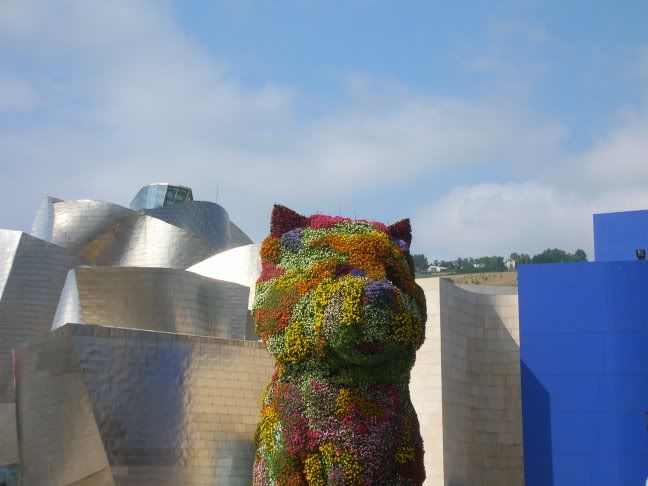
The temporary exhibit that dad and I saw was RUSSIA!
We both thoroughly enjoyed the exhibition. It was perhaps the most interesting single exhibit I have ever seen. Admittedly, I am no art addict, but for a few minutes I am going to pretend to be. Please excuse me.
There were several paintings that I felt. Several paintings that I can say I understood, without needing to know the history of the subject or the artist. Their message was overt. One depicted a scene at sea in the 18th Century. The textures of the furious ocean, the translucent waves and the urgent facial expressions needed little contextual orientation. Another, Barge Haulers on the Volga, however self contained the message was, needed a little.

Ilya Repin
Barge Haulers on the Volga, Oil on canvas State Russian Museum, St. Petersburg © State Russian Museum Click image to view full screen.
As I later learned from the Guggenheim's ongoing online curriculum, the 19th century was an important time for the development of Russian art. Artists began to move away from traditional western art towards an interest in expressing "Russia's unique character" where "…genre painting, which focused on scenes from everyday life, gained strength." Many of the works, as the movement gained strength and general acceptance, were examples of social and political criticism.
In 1861 Alexander II emancipated 22.5 million serfs, owned slaves. The resulting shift of attitude, toward liberalism, meant artists could begin exploring "meaningful" art beyond simple aestheticism. Following this event, and the "Great reforms" in 1863 a small group of artist resigned from the rigid state controlled Imperial Academy of Arts in St. Petersburg. These 14 rogue artists became known as The Wanderers.
So, whilst wandering through the Guggenheim I stopped in front of Ilya Repin's Barge Haulers on the Volga. The painting moved. The eyes, the boat, the haulers and the sky. It all moved, just as I was by it.
Looking back, it was clear the school to which Repin belonged was "progressive, not only in the subjects they chose, but also in the way they reached their audience." Repin, born in the Ukraine, was considered the leader of The Wanderers.
The story goes like this:
Barge Haulers on the Volga Repin's first painting as a Wanderer, and was a direct result of first hand observation of, guess what? Yep, Barge Haulers on the Volga River in Russia.
The painting was a result of further research into the lives of the barge haulers, slaves that were being exploited like animals. I guess there were more than 22.5 million before 1861. In fact, at this time in Russia human labor was generally cheaper than beast. Early sketches in preparation for the piece depicted the haulers just so, as animals. However, as his research progressed, I am told, his sketches became much more reflective of the true nature of his subjects. Human. The resulting work is evidence of this.
From the Guggenheim's curriculum website; "His cast of characters reflects his determination to create a picture of universal, not just local, significance. All 11 are reflections of Russia itself; and no 2 are alike. They are men of various ages, physiques, and ethnic backgrounds, all part of the Russian Empire’s diverse mix of peoples." Additionally, the young boy sixth from the left is doing little work. It seems, on closer inspection, that he is attempting to remove his leather strap. The boy, unstained by years of back-breaking toil, seems to be escaping. Perhaps he has a job waiting at a big insurance firm. Whatever, he is clearly representative of the artists positivity regarding Russias immediate future. I hope no one told him what later happened.
So, yes. I got a lot out of the exhibit. Strangely, a visit to a contemporary art museum in Pais Basco in Spain, funded by a wealthy American, has inspired an interest to visit Russia. Many young travelers rave about Eastern Europe, yet very few visit Russia. I want to go. I want hard boiled eggs and vodka. Ice swimming and fur. Old ladies scarves and men in really blue blue-jeans. One day.
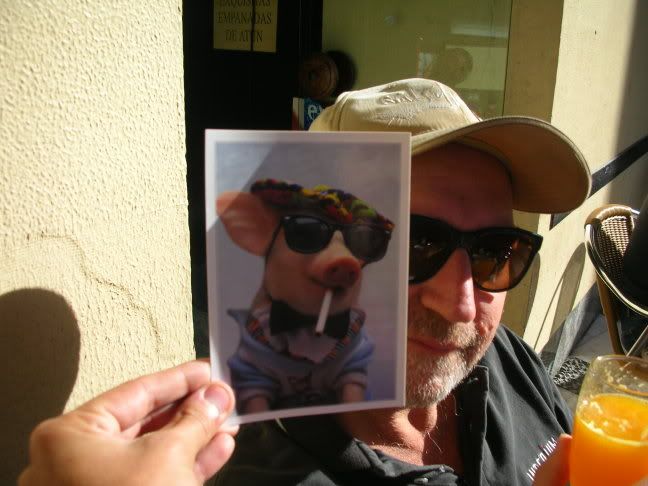
At this stage, I guess I should answer dad's question.
No.
Words on a page, whether from Don Quixote or a History Textbook, did not come to life.
What did? My first few weeks in Europe (ever) crystallized what I had thought for a long time. Europe is a very special place, flooded with place names and monuments that someone educated in the West, like me, is expected to be able to talk about at the dinner table. I cannot. My first few weeks in Europe did not inspire or fulfill me intellectually – instead, my father did.
The act of asking me if these place names resonated was enough. This question, one of many he asked me, enriched an otherwise culturally dry few weeks.
The perspective that my father holds, and his ability to rationalize them is invaluable to a young man/old boy grasping to find his own. Also, he paid.
Next time, we will speak Portugal or Morocco. I have not decided which yet.
Still alive, Daniel.
posted by Daniel Strauss | 4:54 AM
|
12 comments