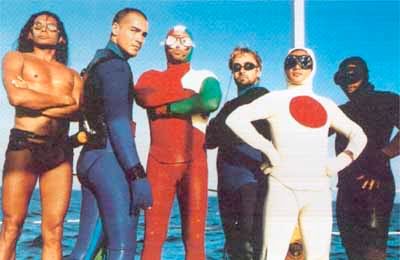
Honduras has much to offer, however with limited time in central America I could only afford to visit a couple of places. This is unfortunately common. I traveled for two days from Leon in Nicaragua to Utila, one of three Bay Islands in the Caribbean. Why go to the Bay Islands? Cheap SCUBA.
As I arrived by board I was stunned by the color of the water in the harbor, a light turquoise that you get from shallow reef and sunbleached sand. In an earlier post I included a picture of me sitting on a dock- that was Utila. It was like, wow.
I enrolled in a SCUBA course and completed my PADI Open Water Certification with little trouble. As an aside, I can wholeheartedly recommend Remy and team at Utila Watersports for your course if and when you visit.
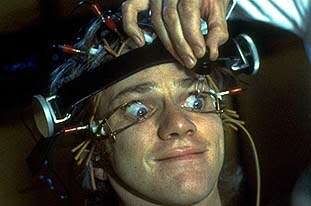
PADI, it is a global brand that governs SCUBA schools and courses across the world in an attempt to standarise SCUBA to ensure safety and profit. The videos that you watch when undertaking a PADI certified course are more boring than talkback radio, but funnier than most sitcoms. Whilst watching the videos, four hours in one afternoon, I felt like a droog in reeducation.
PADI may be an acronym for Put Another Dollar In, or Pay in Advance and Dive, Idiot. SCUBA was great, the first dive was a buzz. I sat on the dock the afternoon after my first dive and tried to understand what it was about diving I enjoyed.
It was not the abundance of fish. It was not the Spotted Eagle Ray. It was not the Lobster. It was not the Moray Eel. It was not the Coral. It was not the warm water, nor was it the sensation of breathing comfortably underwater for the first time since the womb.
It was the feeling of three dimensions. Many of us have experinced this before in backyard pools and in the sea. However, being under the water for an extended time, with the freedom to move up, down, left, right, forward and back was amplified.
Hangon, If I can hold my breath for a while then I can do this for free, whenever I want, with little equipment. That afternoon I went to the Bay Islands College of Diving and met with Rok, a 6 foot 4 Slovenian with a shaved head and a soft accent.
Rok, and his partner Jennifer (who can freedive deeper that him) had submitted an outline for a PADI certified freedive school on Utila. Anyway, Rok surprised when his course was approved for certification, simply because PADI has no interest in promoting an arm of the sport that will raise little or no revenue.
I should probably explain what freediving is, briefly.
Freediving is a recreational sport that involves diving deep or for a long time with no SCUBA equipment. Some simple equipment is used, such as weight belts, fins, mask, and wetsuit. Competitive freediving is a dangerous sport. There are several categories. No limits freediving, where the competitor takes a sled into the blue a rides a balloon up when he/she is ready to turn around, is crazy. In general, there are two things that limit how deep we can dive; how long we can hold our breath if we can equalize as we descend.
Equalizing is simply what you do when you are on a plane, blow and yawn and stuff to stop your ears hurting.
Patrick Musimu recently dove to 209 meters. He exceeded the previous mark by 38 metres. It is rare, in any sport, that records are broken by such a large margin. Musimu´s record however has not been recognized by the sport´s governing body AIDA. There is a dedicated page on their website explaining, in convoluted legal language, the reason the record cannot be accepted. Musimu was able to achieve this depth by filling his sinus and middle ear (the airspaces inside his head) with seawater during descent eliminating the need to equalise. He is the only person who can do this, right now. I have not yet tried. Because freediving is a pure and natural sport, you go as deep as you can and if you come up alive you win, much of the freediving community recognizes Musimu´s record.
Okay, so Rok took me and a couple of other budding idiots for some dry training, that is, classroom stuff. We learnt some basic theory that would help us dive deeper and safer.
After a very light lunch of water and a banana (digestion uses precious O2), we took the boat out to the reef and lowered a 10m line into the water. The goal was that by the end of the day we would be able to dive to 10m and return safely.
I lay on the surface face down and relaxed. I filled my lungs with as much air as I could using a special technique, which I am pretty poor at. I pinched my nose with my left hand during the descent as I dove straight down. On the first dive I was surprised to find that I had reached the end of the line. Looking up, my stomach sank. I had never experienced such a feeling. The surface was well above me, and all was silent. No bubbles from the regulator, no bulky equipment, no snorkel, no one else. I felt that I had sufficient air to checkout the reef fir a bit, but maybe, considering it was my first dive, I should return to the surface.
I continued to practice, following all of the rules and diving a few meters deeper than the line, hanging out there for about 1 minute at a time. I enjoyed SCUBA, but freediving gave me a much more intense feeling. I was elated, on a chemical high. Happy Daniel.
After a break and some more talk we moved to a deeper site for some more dives. This time, the line was 13m long and the sea floor 17m below. I wanted to make it to the bottom. They tell you to never look at the bottom, only look at the line as you descend. Almost impossible.
All I could think about was the bottom. I made it to the bottom and wanted to go deeper, but the seafloor was a obvious obstacle. I did however forget to do something very important.
In addition to equalizing the airspaces in your head, you must (as with SCUBA) consciously equalize the airspace in your mask by blowing air into it through your nose. I had been doing this on every dive, however when you have no air, the last thing you want to do is waste some by equalizing your mask. I later learned that you can always suck the air back into your lungs from your mask as you ascend.
I got barotrauma of the eyes on my deep dive. At 17m I could feel my eyes getting sucked out of my face.
Normally, the eye is protected from barotrauma because the eye is
filled with non compressible fluids, the aqueous and vitreous humors.
A mask has air filled space that is compressible, affecting the
eye and it's adnexa.
If the diver does not expel gas through the nose into the mask on
descent, negative pressure develops inside this space, sucking the
eyes and lids toward this space.
This negative pressure results in marked lid edema and bruising as
well as bleeding under the conjunctivae of the eyeballs.
Vitreoretinal surgery with air placed in the eye contraindicates
diving so long as any of the bubble remains. Pressure induced changes
in the volume of these bubbles may result in hemorrhage inside the eye
and also may result in partial collapse of the eyeball.
Adapted from About.com
Immediately after descent my eyes swelled and dark rings formed. The following morning I woke and the white of my eyes were red with blood. Oh well, didn´t really hurt, I just looked like a monster. No photos of this will be posted, as Blogger.com will shut me down as per inappropriate content regulations.
Freediving is a very spiritual and individual pursuit. Each afternoon I try to practice the breathing techniques I have learned. Rooted in Yoga, they are essentially meditative and I am able to relax and focus on "nothingness". I am getting better at each day.
Now, more than two weeks later my eyes are finally clear again. I am busting to do some more freediving, in Israel or perhaps Egypt in coming months. I want to reach 100feet, 33metres. Entirely possible. Yes, I am hooked.
Hopefully I will be able to tell you all about it.
With love from the depths,
Daniel "TrueBlueJue" Strauss